In the summer of 2006 Waldo County RCC (Regional Communication Center) adopted a Friendly Caller program to assist senior citizens to have a daily contact with some entity. Director Owen Smith was approached by a representative of Waldo CAP who had recently received a grant to develop a database of seniors who could utilize such a program. That grant allowed them to seek out and compose a list of mostly seniors who might want to participate. The grant lasted a year.
Waldo CAP was looking for an agency to participate in such a program. Director Smith was asked what WCRCC/911 (Waldo County Regional Communication Center) might be able to do to help out. As the only 24 hour emergency call center it seemed we could be the perfect fit. From that contact came the Waldo County Friendly Caller Program.
There are many people in our mostly rural County that live alone and do not have daily contact with anyone. Many do not have relatives living in the area. The ability for them to have a safety contact, in a non- medical emergency, seemed to be another way that they could continue living in their homes. Waldo CAP would reach out to these people and secure their names, phone numbers and addresses. From this list dispatchers at the 911 Center developed the form we would need to make the program work. Waldo County TRIAD started assisting the program in outreach, advertising and support. The program started with approximately 30 people who would call into the Center on a daily basis just to say good morning and ?I am fine.? Dispatchers record the call on a tracking sheet and often chat with a caller if time permits. Many times it is learned that maybe someone had been scammed or some other problem problems.
If callers do not make that phone call between 6 am and 10 A.M., then dispatch will call them. If the dispatcher does not reach that person or a designated contact a law enforcement officer is sent to check on the welfare of the person. All of law enforcement agencies in our county participate in the program.
Early in the program the worth of such a service was first proven when an elderly lady did not make the call on a Monday morning. Efforts to reach her were fruitless and a deputy was sent to her house. That deputy found the lady on the floor, not able to get up and had been there nearly 24 hours. She thought she had fallen shortly after talking to the dispatcher the day before. She was transported to the hospital and eventually did not return to her home. How long might she had lay there if not for the program. Several such situations such as this has happened over the years.
Today the program has 32 callers. Two of the originals. I think we could probably handle up to 50 ? 60 callers. Throughout time, friendships between the callers and the dispatchers have developed. The dispatchers have developed programs to get the callers together such as picnics and the annual fall dinner. Last year we were not able to have the dinner nor any events due to the threat of Covid. Several dispatchers have been collecting the food boxes recently distributed and get them to our callers.
The program designed for seniors who do not have daily contact is open to all residents of the county. A confidential application needs to be filled out and turned in to the center and callers must agree that they will call everyday between 6am and 10 am or let us know they will not be calling.
I believe that in some small way our program does help people stay in their home with a feeling of security or daily contact. I would like to add that the program is self- funded through dispatcher dress down days (Saturday, Sundays, and Holidays) when they might make small donations. No tax payer money is used for the program.
Interested people may call 338- 2040 to discuss the program and obtain an application.
I attend lots of meetings and events for SCBWI (Society of Children’s Book Writers and Illustrators). I have noticed that people newer to writing for children don’t know all that much about children’s literature. This is my gift to SCBWI members.
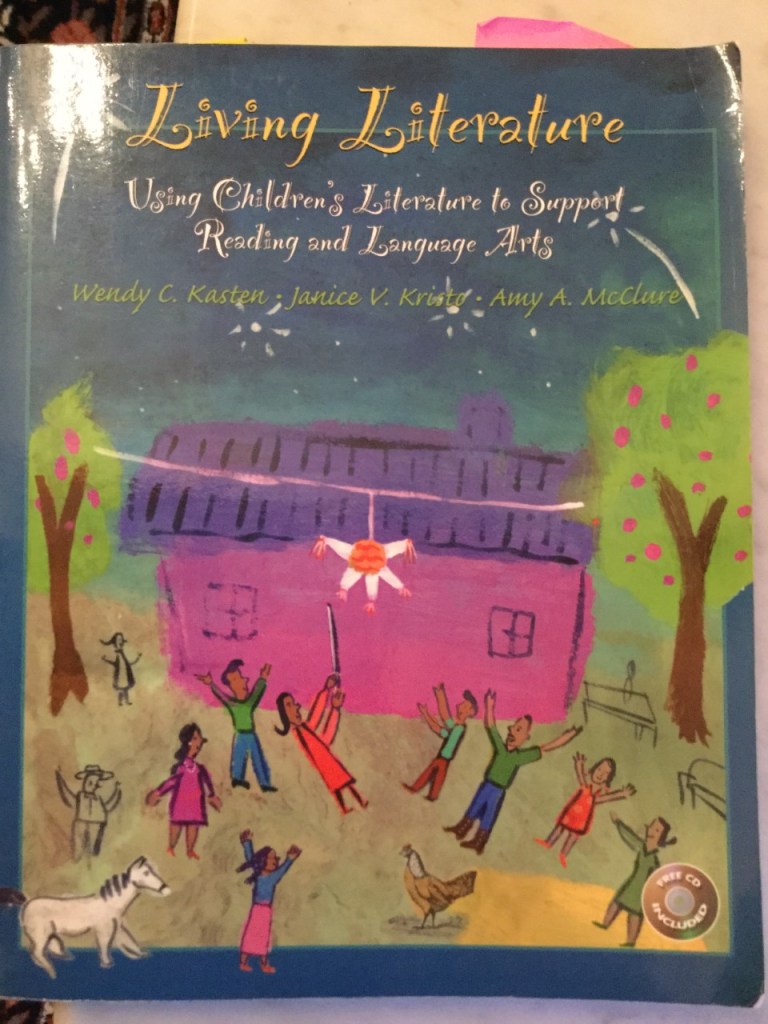
In 2005, I co-authored a textbook on Children’s Literature with Pearson Education, which was moderately successful. So, using my knowledge, I have created here a presentation to fill you in, writers!
HERE GOES: What is children’s literature?
Children’s Literature (fiction, nonfiction, poetry, traditional literature) is roughly defined as preschool through about age 14 -ish. In schooling, that includes older preschool (3-5 year-olds); Elementary School, and Middle School (which can include Grade 8). Literature written for kids older than middle school is called “Young Adult.” YA is a bit more sophisticated, more complex, often contains more mature content (like romance, drugs, sex). It is important to understand however, that these divisions are somewhat artificial and approximate, because younger kids may get into YA books before they are 14 years old.
FIRST OF ALL – FICTION VS. NONFICTION
FICTION – A MADE-UP STORY, WRITTEN IN NARRATIVE (AS OPPOPSED TO EXPOSITORY) The confusing thing is that the word FICTION is also used to denote something untrue. Fiction, as the literary genre is not factual, but it is full of many truths. Fiction is sometimes called “Human Experience in Narrative.” I got that definition from Katherine Paterson. The lady us brilliant. In addition to her credible list of award-winning books, check out her essays, writers. THE GATES OF EXCELLENCE and THE SPYING HEART.
NONFICTION – Books that are factual, informational, generally written in expository text (as opposed to narrative). Nonfiction often includes things like: A Table of Contents, Chapter Headings, Subheadings, Index, Glossary, Bibliography (although some fiction has bibliographies)
Caption: Children’s Literature is not that old. Historically, publishers did no believe that books for children were a viable market. Exceptions were Beatrix Potter and her Peter Rabbit series, or A,A, Milne with this four books around a Winnie the Pooh toy bear. Theodore Geisel was hired by a company making reading textbooks for children to write for the “basal reader.” He instead published his creation as a trade book. The notion here was to write with a limited or controlled vocabulary to support developing readers. The field of children’s literature got a big boost from Dr. Seuss (Geisel). When this came out in the 1950’s, it sold very well.
Most books which have been written since the beginning of the printing press are NONFICTION. Library cataloguing systems are designed to organize and access nonfiction. There are SOOOO many categories such as:
Books on a topic (any topic imaginable)
Biographies
Autobiographies, memoir
Dictionaries and other reference books
Cookbooks
How-to books
Atlases
Encyclopedias
Instructional textbooks
Telephone directories (when that was a big deal)
Any kind of directory
Instructional manuals
Photo Essay
This a bit confusing? When in doubt to determine if a book is nonfiction or fiction, go to the COPYRIGHT PAGE in the book where you find the date and all that, and it will tell you.
“Juvenile Literature” means nonfiction.
“Juvenile fiction” means fiction
Either may contain “keywords” that relate to content.
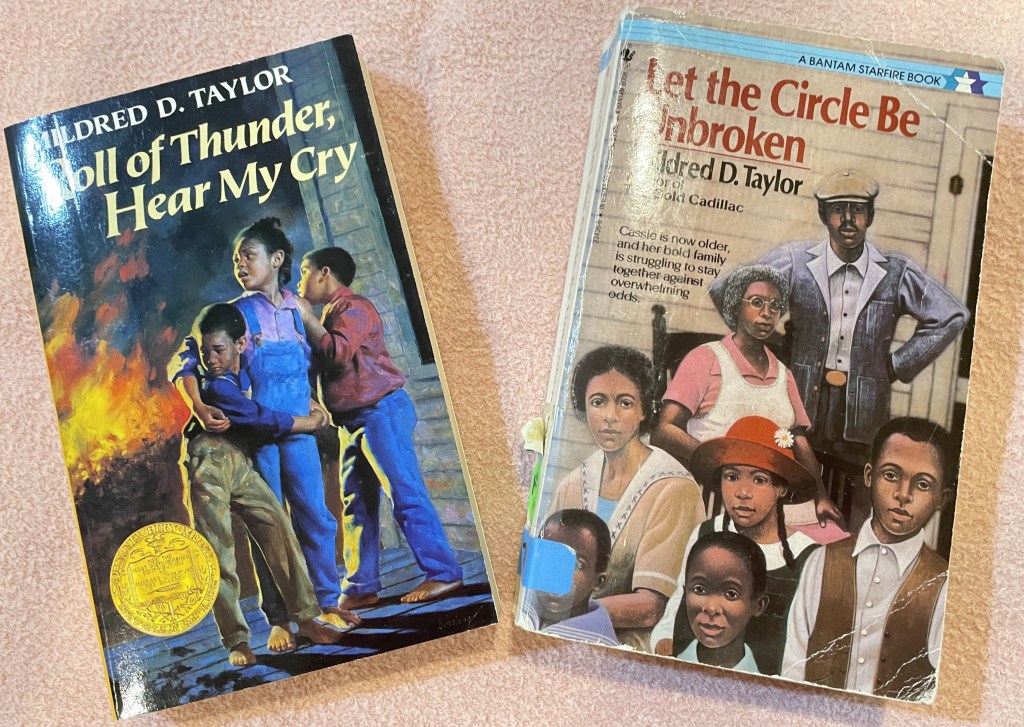
THESE AWARD-WINNING NOVELS ARE HISTORICAL FICTION, BASED ON THE AUTHOR’S FAMILY HISTORY, BUT THEY ARE STILL FICTION AS THEY PRIMARILY TELL A STORY.
Form vs. Genre
Genre is based on what the book is about. Nonfiction is a genre. Subgenres within nonfiction are biography, manuals, reference books, informational books, guides, etc.
Fiction is a genre with a bunch of subgenres. Contemporary Realistic fiction is set in the present. Historical fiction is set in the past (where that past begins depends on the age of the readers and the intent of the writer, and the age of the book. Little Women is now historical fiction because it’s been around so long, but it was contemporary fiction when Louisa May Alcott wrote it. Fantasy is a story containing magical or supernatural elements, such as magical objects, time travel – anything not possible in real life. Science Fiction is speculative imagining a scene, place, or future time with differing technologies or worlds. Science fiction MUST be rooted in sound and accepted scientific theory (or else it is fantasy). The generations of Star Trek on television is a common example of science fiction, as their ships, stories, and encounters have been theorized.
There are subgenres in adult fiction that do not appear in children’s literature: Romance, Horror, would be two examples.
FORM is how the book is presented. A novel is a FORM. Poetry is a FORM. A Pop-up book is a FORM. AND a PICTURE BOOK is a FORM.
A picture book could be POETRY if the text is one long poem.
A picture book could be Nonfiction biography is its about Nelson Mandela, or Barack Obama, or Florence Nightengale,
A picture book could be Traditional literature is it’s the retelling of an old folk tale, or other traditional story, such as The Three Little Pigs, or The Blind Man and the Elephant, or Brer Rabbit, or the Legend of the Bluebonnet (flower).
A picture book can be a Alphabet book, which is a nonfiction form. The topic of the alphabet book might vary greatly.
A picture book could be a charming made-up story, which many of them are, such as Strega Nona, or Click Clack Moo.
A picture book could be Historical fiction, loosely based on something real in history, such as Train to Somewhere.
MORE ABOUT THE FORM CALLED THE PICTURE BOOK
A true picture book has 32 pages. This is because it is comprised of to signatures of large paper that has been folded into 8ths, using both sides makes 16 pages, two signatures add up to 32 pages. This applies to hard over editions which generally have a sewn binding, a rigid spine, and endpapers. These features are lost in paperback editions, which accounts for the differences in price.
Endpapers are not counted in the 32 pages. One side of the endpaper is pasted into the front cover. Same in the back. Endpapers are normally a different kind of paper, and may be plain, or decorated to accompany the theme of the book.
Picture Books rarely have more than 1200 words. For younger readers, a few hundred words is common. There are exceptions.
Picture book are illustrated AND in a high quality picture book, the expectation is that the art and the text work together to create the nuance of this unique form.
It is common for picture book writers to submit their work, and for the editor at the publishing house to choose the illustrator. Often, authors do not see illustrations prior to publication. The illustrators are given license to bring their own creativity and expertise to the text – making the final product a unique collaboration.
Some folks are both authors and illustrators. Typically, the text of the book is accepted for publication without the illustrations, or with only a sample of the illustrations.
Caption: These are all picture books, but represent different genres in the writing. Planting the Tres of Kenya is nonfiction; Big Anthony is fiction – a charming made-up story; Same with Don’t Let the Pigeon Drive the Bus. While One Candle is historical, telling of memories of the holocaust; Willie and the All-stars is a story but Floyd Cooper tells about segregation in sports; The Greatest Power is an Asian folktale retold by Demi; Gingerbread Baby (Brett) builds on the folktale of the Gingerbread boy, but is a made up story. Picture Books have different trim sizes. Note several have “landscape orientation” and others have “portrait orientation.” These design decisions are generally made at the publishing house, along with the selection of paper, layout, etc.



 Dr. Wendy C. Kasten, Writer